
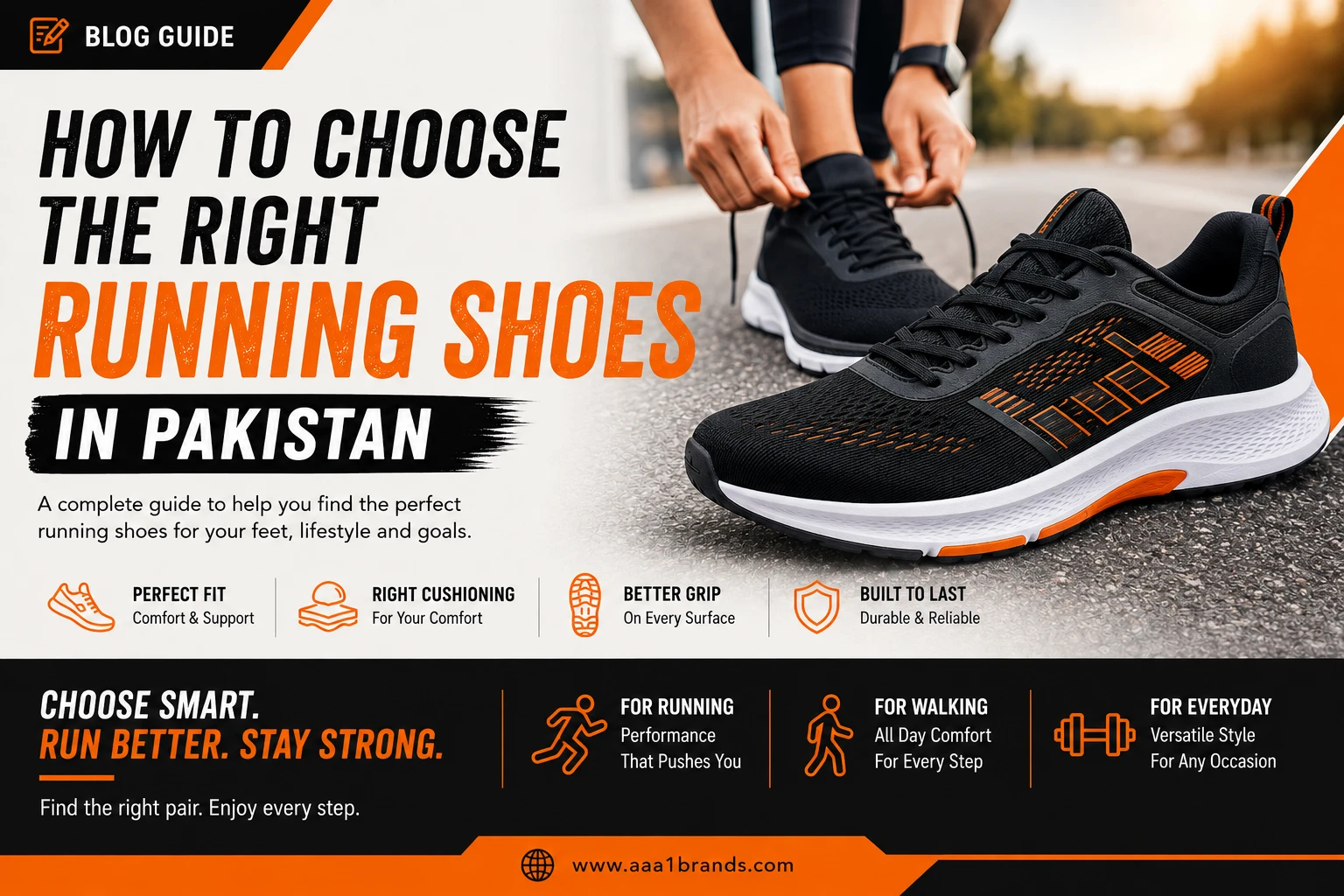
Choosing the right running shoes isn’t simply about picking the most expensive pair or choosing the one that looks best. The right shoe depends on how you run, where you run, how often you use it, and how it fits your feet.
Whether you’re starting running, exercising regularly, walking every day, or looking for one comfortable pair for multiple activities, this guide will help you understand what to look for before buying running shoes.
How to Choose the Right Running Shoes?
Start with four things:
- How you will use the shoes?
- Where you will use them?
- How they fit your feet?
- How much cushioning and support you prefer?
A running shoe designed for regular road running may feel very different from a lightweight shoe intended for casual everyday use.
Before looking at brands or appearance, think about your actual needs and how you plan to use the shoes.
What Should I Look for When Buying Running Shoes?
1. Decide What You’ll Use the Shoes For
Ask yourself:
- Do I mainly run?
- Do I walk a lot?
- Do I exercise or work out?
- Do I need shoes for everyday wear?
- Will I use them for several activities?
If you’re primarily running, look for a shoe designed specifically for running. If you want one pair for walking, casual wear and occasional exercise, comfort and versatility may be more important.
The best running shoe is not necessarily the best shoe for every person.
2. Get the Right Fit
Fit is one of the most important factors when choosing running shoes.
Your toes should have enough room to move without your foot sliding excessively inside the shoe.
A good starting point is to check:
- Your toes aren’t pressing against the front.
- Your heel feels secure.
- The shoe doesn’t squeeze the widest part of your foot.
- Your foot doesn’t slide excessively when walking.
- There are no obvious pressure points.
Your feet can also swell during longer periods of activity, so a shoe that feels comfortable only when you’re sitting down isn’t necessarily a good fit.
How Should Running Shoes Fit?
A properly fitting running shoe should feel secure but not painfully tight.
Your heel should remain reasonably stable while your toes should have enough room to move naturally.
Don’t choose a shoe simply because you normally wear a particular size in another brand. Sizing can vary between brands and models, so always check the available size information and, when possible, try the shoes on.
How Much Cushioning Do Running Shoes Need?
There’s no single amount of cushioning that’s right for everyone.
Some runners prefer a softer, more cushioned feeling, while others prefer a firmer and more responsive feel.
Consider:
- Your personal comfort preference
- Your running distance
- The surfaces you normally run on
- Whether you use the shoes primarily for running or everyday activities
More cushioning isn’t automatically better. Comfort and suitability for your intended use matter more than simply choosing the thickest sole.
What Type of Sole Is Best for Running Shoes?
The outsole should provide appropriate traction for the surface where you’ll use the shoes.
For typical road and everyday running, you generally want a sole that provides:
- Reliable grip
- Flexibility
- Adequate durability
- Comfortable movement
If you mostly run outdoors, consider the surfaces you encounter regularly rather than choosing a shoe based only on its appearance.
Are Running Shoes Good for Everyday Walking?
Yes, many running shoes can be excellent for everyday walking because they’re designed around comfort, cushioning and repeated movement.
However, running and walking aren’t exactly the same activity.
If you spend most of your day walking rather than running, prioritize:
- Comfort
- Fit
- Breathability
- Weight
- Sole flexibility
- Durability
For someone who wants one versatile pair for walking, commuting and occasional exercise, a comfortable running or athletic shoe can be a practical choice.
What Is the Difference Between Running Shoes and Walking Shoes?
Running shoes are generally designed to handle the greater impact and repeated movement associated with running.
Walking shoes may place greater emphasis on the movement pattern and comfort associated with walking.
That doesn’t mean one category is automatically better.
If you regularly run and walk, a suitable running shoe may give you the versatility you’re looking for.
If you only walk, you can focus more heavily on walking comfort, fit and durability.
What Are the Best Running Shoes for Beginners?
For beginners, don’t overcomplicate the decision.
Look for a shoe that:
- Fits comfortably
- Feels secure around the heel
- Gives your toes adequate space
- Provides appropriate cushioning
- Has enough grip for your normal running surface
- Isn’t unnecessarily heavy
- Matches your budget
You don’t need the most expensive shoe available to start running.
Comfort and fit should come before appearance or brand name.
Should Running Shoes Be Lightweight?
Not necessarily.
A lighter shoe can feel more agile, but reducing weight shouldn’t come at the expense of comfort, durability or the features you actually need.
For everyday use, a balance between weight, cushioning, stability and durability may be more useful than choosing the lightest shoe possible.
How Often Should You Replace Running Shoes?
There isn’t one exact replacement schedule that works for everyone.
How long a shoe lasts depends on factors such as:
- How frequently you use it
- How far you run
- Your body weight
- Running surface
- Shoe construction
- How you use and maintain it
Instead of replacing shoes simply because a certain number of months have passed, pay attention to their condition.
If the cushioning feels noticeably different, the outsole is significantly worn, or the shoe no longer feels supportive or comfortable, it may be time to consider a replacement.
How to Choose Running Shoes in Pakistan
For shoppers in Pakistan, your everyday environment matters.
Weather
Breathable uppers can be useful during hot weather, particularly if you’re running or walking outdoors for extended periods.
Road Conditions
Choose a sole with suitable grip for the surfaces you regularly encounter.
Daily Use
If you’re commuting, walking and exercising in the same pair, versatility becomes important.
Budget
Don’t assume that the most expensive shoe automatically provides the best experience for your particular needs.
Sizing
If you’re buying shoes online, check the available size chart before placing your order.
Quick Checklist Before Buying Running Shoes
Before you purchase, ask yourself:
☐ What will I mainly use these shoes for?
☐ Do they fit comfortably?
☐ Is there enough room around my toes?
☐ Does my heel feel secure?
☐ Is the cushioning comfortable for me?
☐ Is the sole suitable for my usual surface?
☐ Are they breathable enough for my environment?
☐ Do I need them primarily for running, walking or both?
☐ Have I checked the available size information?
If you can answer these questions confidently, you’re much more likely to choose a shoe that actually suits your needs.
Final Thoughts
The right running shoe isn’t necessarily the most expensive, the most popular or the one with the most cushioning.
The better approach is to choose according to your activity, fit, comfort, running surface and personal preferences.
If you’re shopping for running or sports shoes, explore the AAA1 Brands Running & Sports Shoes collection to compare available options and find a pair that fits your intended use.
Frequently Asked Questions
How Do I Know If My Running Shoes Fit Correctly?
Your heel should feel secure without excessive movement, while your toes should have enough room to move without pressing against the front of the shoe. The shoe shouldn’t create painful pressure points.
Are Running Shoes Suitable for Everyday Use?
Many running shoes are suitable for everyday walking and casual use, particularly when comfort and cushioning are important. Choose according to how you actually intend to use them.
Should Running Shoes Be Tight or Loose?
They should be secure but not painfully tight. Your heel should stay reasonably stable while your toes should have enough room.
Are Expensive Running Shoes Better?
Not necessarily. Price alone doesn’t determine whether a shoe is right for you. Fit, comfort, intended use and construction are more important considerations.
Can I Use Running Shoes for Walking?
Yes. Many running shoes work well for walking, especially if you find them comfortable and they provide appropriate support and grip for your normal use.
Author: AAA1 Brands
Suggested category: Running & Sports Shoes